 b8d5d3c0a6
The first pass of the integration logic mixed names between
"integration" and "extension". For example, the remote service
has an "IntegrationId" whereas the part of the password manager
it extended has an "ExtensionPointId".

The new types have a more consistent approach. The remote
service now distinguishes the integrated product from the
vendor providing it, and the logic within the password manager
is now all the "extension". The specific location being extended
is now called the "site" or "extension site".

The main reason "extension" was chosen over "integration" is simply
so that the new and old types remain distinct in the folder hierarchy.
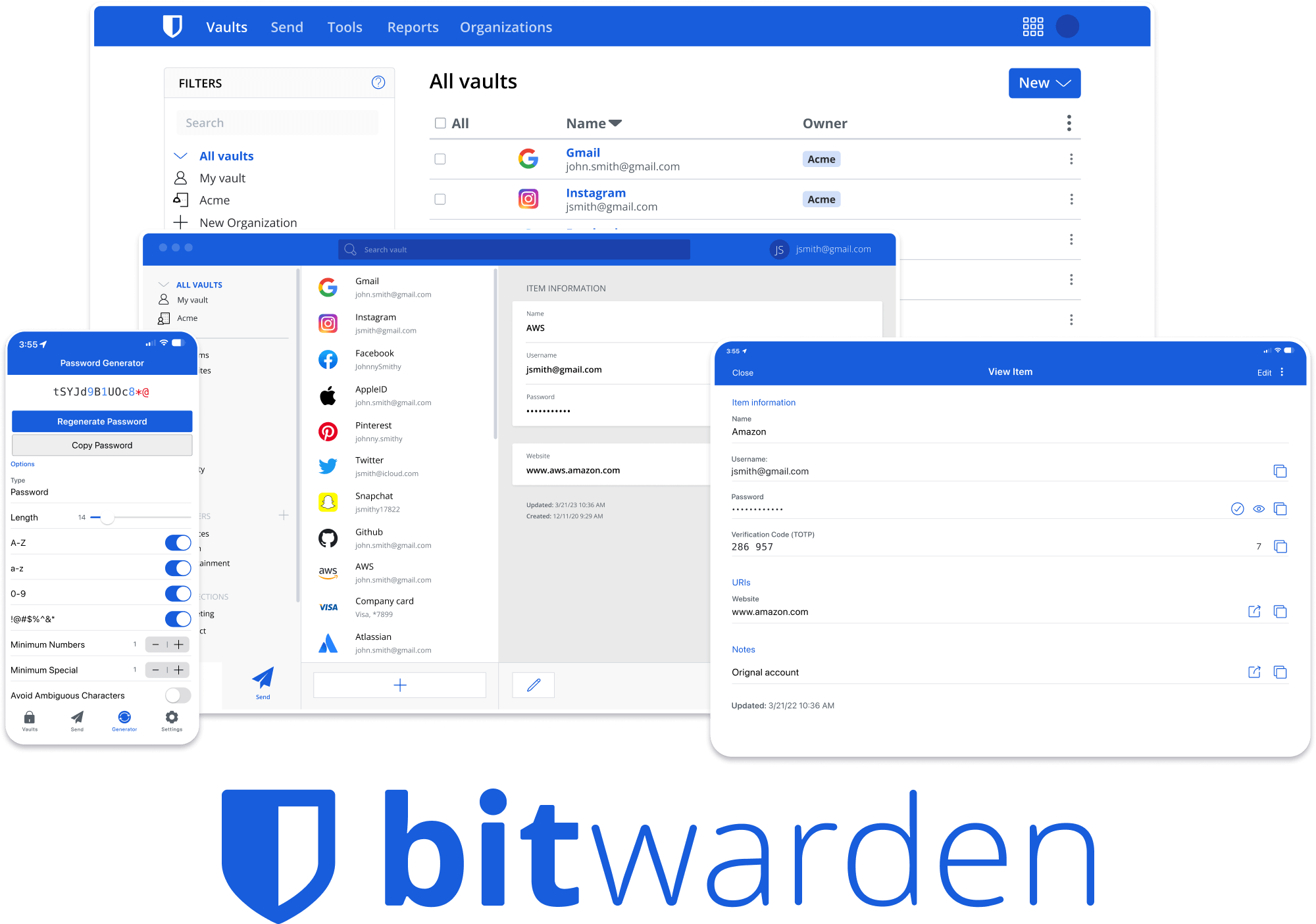





Bitwarden Client Applications
This repository houses all Bitwarden client applications except the Mobile application.
Please refer to the Clients section of the Contributing Documentation for build instructions, recommended tooling, code style tips, and lots of other great information to get you started.
Related projects:
- bitwarden/server: The core infrastructure backend (API, database, Docker, etc).
- bitwarden/ios: Bitwarden mobile app for iOS.
- bitwarden/android: Bitwarden mobile app for Android.
- bitwarden/directory-connector: A tool for syncing a directory (AD, LDAP, Azure, G Suite, Okta) to an organization.
We're Hiring!
Interested in contributing in a big way? Consider joining our team! We're hiring for many positions. Please take a look at our Careers page to see what opportunities are currently open as well as what it's like to work at Bitwarden.
Contribute
Code contributions are welcome! Please commit any pull requests against the main branch. Learn more about how to contribute by reading the Contributing Guidelines. Check out the Contributing Documentation for how to get started with your first contribution.
Security audits and feedback are welcome. Please open an issue or email us privately if the report is sensitive in nature. You can read our security policy in the SECURITY.md file.